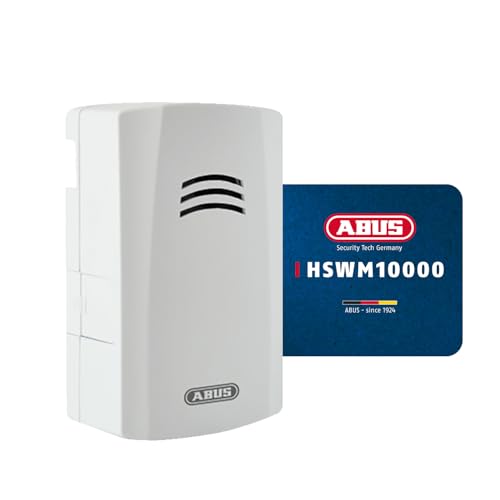
 View product image on Amazon
amazon.com
ABUS HSWM10000 · Water alarm with sensor cable
Current price and availability on Amazon.
Search on Amazon.com ↗Peace of mind. In every room.
On Leak doesn't wait until you get home. Discover water detectors and smart sensors that warn you early - from the basement to the kitchen.

Discover products
Discover different models and compare the current details directly on Amazon.
View product image on AmazonCurrent price and availability on Amazon.
Search on Amazon.com ↗ View product image on Amazon
Current price and availability on Amazon.
Search on Amazon.com ↗ View product image on Amazon
Current price and availability on Amazon.
Search on Amazon.com ↗ View product image on Amazon
Current price and availability on Amazon.
Search on Amazon.com ↗ View product image on Amazon
Current price and availability on Amazon.
Search on Amazon.com ↗ View product image on Amazon
Current price and availability on Amazon.
Search on Amazon.com ↗For every need
Single sensor or networked system: find the solution for your spaces.
Make well-informed decisions
An unnoticed water leak can cause significant damage within a short period of time and not only affect floors, walls or furniture, but in the worst case scenario can also permanently damage the building structure. It therefore makes sense to seek technical support at an early stage, especially in sensitive areas such as the kitchen, bathroom, laundry room, boiler room or basement. Modern water detectors help to immediately register leaking water and draw attention to the problem with an acoustic signal or an intelligent notification. This is particularly helpful if a leak forms in places that are not constantly visible. A suitable warning system can therefore make a decisive contribution to limiting damage, reducing repair costs and detecting emerging moisture in good time. Depending on the location, different systems are possible because not every household has the same requirements. While in some cases a compact detector with a loud alarm is sufficient, in other situations smart versions with a radio or Wi-Fi connection are the better choice. The size of the area to be monitored, the placement of the sensor and the desired range of functions also play an important role in the selection. If you deal with the topic early on, you can make your own living situation significantly safer and protect yourself from unpleasant surprises. Water detectors are therefore no longer just an addition for those interested in technology, but rather a practical solution for everyone who wants to secure their home in a meaningful way. With the right combination of sensors, alarm function and appropriate placement, risks can be minimized and water damage can be detected much more quickly.
In many cases, water damage occurs gradually and initially remains undetected. A leaky washing machine, a dripping pipe under the sink, a defective seal on the heating or a backwater in the basement can be enough for moisture to spread unnoticed. This is exactly where the advantage of modern monitoring solutions becomes apparent: They register escaping water early and give an alarm before major consequential damage occurs. Particularly helpful are classic Water leak detectors, which can be easily placed in critical locations. They are ideal for rooms where water should not normally be on the floor. In addition, special Water sensors a targeted detection of moisture or leaks and, depending on the model, can be flexibly integrated into existing security or smart home concepts. If you want to effectively prevent water damage, you should not only rely on the alarm in an emergency, but also identify typical danger spots when planning your living space. These include connections for dishwashers, washing machines, water heaters, pump systems, aquariums or even window areas in basements. Good prevention therefore means using technology where it brings the greatest benefit. It is also important to regularly check the detectors for functionality, change batteries in a timely manner and keep the sensors clean. This means the protective function is maintained permanently. Another advantage of these systems is that they are easy to retrofit, as many devices can be integrated into existing living or utility areas without much installation effort. Anyone who recognizes early on where there are risks in the household can create a reliable security basis with suitable detectors and significantly reduce the likelihood of expensive renovations. Prevention not only makes sense here, but is often the crucial difference between a minor inconvenience and extensive water damage.
Not every detector works in the same way, so it's worth taking a closer look at the different device types. For many areas of application, a classic Water leak alarms a good choice because it immediately triggers a clearly audible signal when it comes into contact with moisture. Such models are particularly practical for households where a direct on-site warning is sufficient and endangered areas are accessed regularly. In addition, Flood alarms interesting to monitor the rooms in which water should generally not occur. They are suitable for many typical everyday situations and provide a quick response option as soon as a leak occurs. There are also versions that are specifically designed for a more technical or controlling function, for example if the water level also needs to be monitored or a certain level needs to be detected. Choosing the right system depends largely on how quickly you want to be informed, how large the area to be monitored is and whether just an acoustic signal is sufficient or whether more advanced functions are required. Some devices are particularly compact and can be placed inconspicuously in niches or under devices, others have external sensor cables or additional warning options. The volume of the alarm, the power supply and the range of the sensors also play a role in the decision. For example, if you want to secure several rooms, you should pay attention to flexible expandability. For smaller apartments, a simple, ready-to-use model is often sufficient, while more powerful solutions can make sense in single-family homes or basements. Above all, it is important to clearly define the intended purpose: should the warning only be given about water or should it also be possible to control the area more precisely? With a clean selection, the protective effect in everyday life can be significantly increased without the technology having to be complicated or expensive.
Anyone who is often on the move or wants to secure their home digitally will particularly benefit from intelligent warning systems with a network or radio connection. A Water detector WiFi can not only alert locally, but also send messages to the smartphone. This is particularly a big advantage if the water leak occurs in the basement, in the holiday apartment or in rarely used rooms. This means you can react quickly even from a distance. A Wireless water leak detectors, which communicates wirelessly with other components and thus allows flexible placement. Such solutions are particularly interesting in larger apartments or houses when several zones need to be monitored and the alarm needs to be reliably detectable even in more distant areas. Smart systems are suitable not only for technology fans, but for anyone who wants additional convenience and more control. In many cases, they can be easily integrated into existing processes and can help you react to critical events much more quickly than purely analog variants. This is particularly useful in basements, utility rooms or heating areas, because water is often only noticed when visible damage has already occurred. At the same time, it should be noted that smart devices only show their full potential if WiFi coverage, battery care and setup are implemented reliably. A clean installation, good positioning of the sensors and a test run after setup are therefore recommended. If you take these points into account, you will receive a modern security solution that offers reassuring added protection both in everyday life and when you are away for a long time. Particularly in households with multiple potential sources of danger, networked monitoring can help to systematically reduce risks.
Selecting the right system always depends on where the device is to be used and what the everyday requirements are. For some households, a simple detector with a loud beep is sufficient, while others prefer a more comprehensive concept that protects several rooms at the same time. A classic Water leak monitors is ideal if an area needs to be reliably monitored and an immediate acoustic warning should be given in the event of moisture. If you also want to observe how high water rises or when a certain level is reached, you should also use a Water level alarms employ. Such solutions are particularly useful in basements, technical areas or anywhere where water levels need to be controlled or flooding situations need to be detected early. A few simple guiding questions will help you make the decision: How large is the area to be secured? Should the alarm only be audible on site or should it also be reported while on the move? Do you want a compact device with no installation effort or a system with advanced functions? The power supply is also an important point, because battery-operated devices are flexible but need to be checked regularly. Models with additional functions often offer more convenience, but usually require more precise planning. If you only want to protect individual danger zones in the kitchen and bathroom, you can achieve a lot with just a few devices. In larger houses, however, a coordinated solution with several sensor points often makes more sense. Ultimately, it is not just the technology itself that is crucial, but also the correct placement: sensors should, if possible, be installed where water first escapes or collects. Anyone who realistically assesses their own needs and pays attention to quality, a good warning effect and a suitable range of functions creates a solid basis for more security in the entire household.
Water detectors should always be positioned in typical danger areas, for example under washing machines, dishwashers, sinks, in basements, next to heating systems or near hot water tanks. It is important that the sensor is located where escaping water can be detected first.
A water detector is usually the complete warning system with an alarm function. A water sensor often refers to the actual sensor that detects moisture or water. Depending on the model, the sensor is permanently integrated or as a separate element as part of a larger system.
Yes, especially if you travel frequently or want to monitor rarely used rooms. In addition to the acoustic alarm, a Wi-Fi water detector can also send a message to the smartphone, enabling a faster response, even if no one is at home.
That depends on the living situation. In a small apartment, a single device for a critical area may make sense. In a house with a basement, utility room, kitchen and several water connections, several detectors usually make sense in order to specifically protect different risk zones.
It is recommended to test the water detector at regular intervals, for example once a month or according to the manufacturer's instructions. The alarm function, battery and sensor surface should be checked so that the device works reliably in an emergency.
Suitable for your home
Place sensors where a leak is first noticed. Check the function regularly and follow the manufacturer's instructions.
Under the sink and next to the dishwasher.
Near the washing machine and water connections.
In vulnerable places next to pipes and heating systems.